

People have always had a habit of collecting, and it's no different with cars and trucks. Like all other hobbies and collectibles, external factors such as culture, social trends and age demographics influence how we collect cars; and even which ones are most sought after. The hobby is undergoing some interesting changes as new technology disrupts old-school design, and a new generation of car enthusiasts enter the hobby to make their desires known.
Let's take a look at five trends that show how the collectors' hobby is shifting gears.
The early days and the steadying influence of baby boomers
While the first cars were introduced in the early 20th century, it took only a few decades for the earliest collectors to form the Antique Automobile Club of America in 1935. In later years, as the hobby came of age, collectors were primarily interested in cars from the «pre-war» era, or those from before 1945. Some of the most popular are the Ford Model T and Model A, as well as any Packard or Pierce-Arrow (if they could afford it!).
As the baby boomer enthusiasts (born roughly between 1946 and 1964) got older, we began to see one of the first major demographic shifts affecting collecting. Cars from the 50«s and 60»s fell into this group. Cars like the 1957 Chevrolet Bel Air and the 1965 Ford Mustang were "instant classics". They were popular when new, popular as used cars, and popular as collector cars by those who wanted to recapture their younger years.
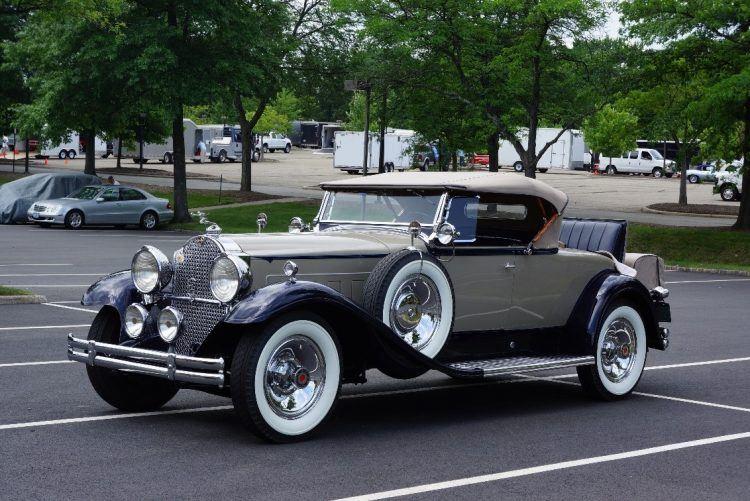 1931 Packard. Photo: Richard Reina.
Trend #1: passing the torch
As a group, boomers tended to be more affluent than the previous generation and so could afford to collect cars and trucks of higher quality and in greater numbers. This created an interest in collecting European exotics like Ferraris and Porsches, as well as impressive personal collections of 10, 20 or more cars, and a place to collect all that sheet metal. This growth was accompanied by a parallel rise in car shows, rallies, auctions, and flea markets, each vying for a share of hobbyists' time and money.
As the cliché goes, the only undeniable facts in life are death and taxes; and while collectors may have been looking for ways to use their old cars as tax shelters, there was no stopping the fact that they would start to pass on. While the demand for some of the «instant classics» of the '50s and early '60s will continue, we are beginning to see interest in other models wane as we lose older members of the boomer generation.
 This growth was accompanied by a parallel rise in car shows, rallies, auctions, and flea markets, each vying for a share of the enthusiasts' time and money. Photo: Richard Reyna.
Trend No. 2: the next generation is taking over the wheel
On the other hand, the hobby remains strong as younger collectors enter it. Many generational Xers and Millennials have an interest in collecting, but turn their noses up at most pre-war cars. While they may harbor some attraction with well-designed cars from the 60's (think Mustang again!), It's no wonder that cars of IH's youth are bought as collectibles.
This trend has led to some changes in how participants enjoy the hobby. For example, Japanese cars, which began selling in large numbers in the U.S. in the 1970s and 1980s, are what young collectors recall. Chances are their parents had one or two at home - they may have even learned to drive in one! So naturally, this group started collecting them.
Related: Are Fast and Furious really boosting the appeal of Japanese cars?
Everything from Honda Civics to Toyota Celicas are in demand. On the other hand, Asian supercars like the Acura NSX and Toyota Supra are dropping prices at auction, approaching six figures. (This is after the Baby Boomers incorrectly predicted that Japanese cars would simply never become collectors' items!) Video games and movies have sparked interest in Japanese Domestic Market Vehicles (JDMs), which are not officially imported here. And yes, that includes right-hand-drive ones that have embraced millennials.
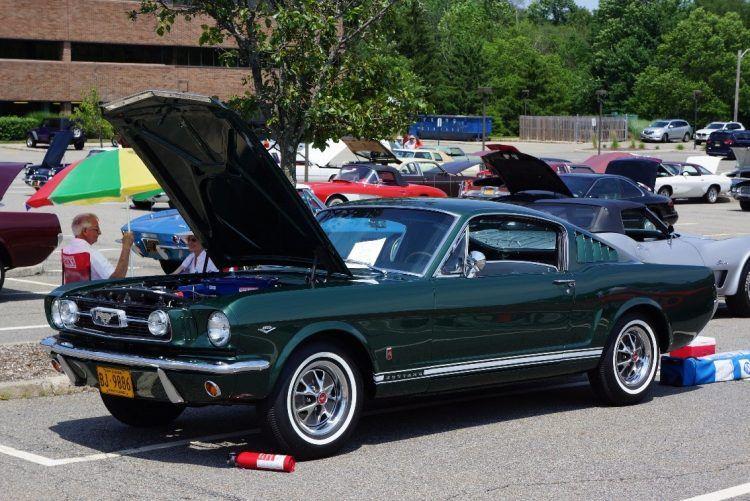 Regardless of generation, people always admire the classic Ford Mustang. Photo: Richard Reina.
Trend #3: the best of both worlds
In addition to creating a demand for new-age cars, these so-called «young people» have changed their hobby in other ways. Unlike their parents and grandparents who favored or demanded originality in their classic cars, today's young collectors are willing to make changes. The first example is resto-mods, defined as taking an older car (such as a 1967 Chevy Camaros) and outfitting it with modern amenities that were not available in 1967. The car is restored to its original appearance, but a fuel-injected engine; air conditioning; four-wheel disc brakes; a high-end sound system; and power windows and seats are added.
The result is a car with classic looks but a modern driving experience.
Related: These practical vehicle modifications benefit every driver.
Trend #4: Thinking Green.
Another trend revolves around those who consider caring for the environment as their personal concern. They take this modern approach one step further by buying old Jaguars, Porsches and the like. These buyers are putting them on full battery power. Any concerns about poor fuel mileage or pollution related to emissions control go right out the window with that smog-hungry engine. They want to show the world that they can have their cake (beautiful foreign classic) and eat it too (zero-emission ride).
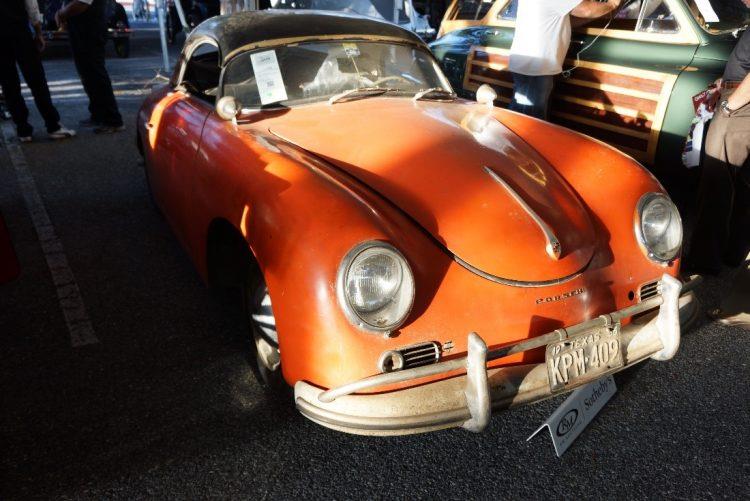 This Porsche barn find was no doubt a treat for those who stumbled upon it. Photo: Richard Reina.
Trend #5: Hunters and gatherers
This trend is affecting young and old collectors alike, and is described as a «turn to the right» toward total originality. We are NOT talking about a 100-point, $100,000 restoration here to bring an old Jalopa back to a new showroom. Instead, recent collecting habits have revealed an interest in cars that have never been restored, especially if they are «barn finds,» named for cars that were dismantled in barns and left untouched for many decades. It has been a shock to watch such cars cross the auction blocks and sell for more than the same car would if they were ideally fully restored.




 EN_CA
EN_CA  RU
RU  UK
UK  EN
EN  PL
PL  DE
DE  BG
BG  FR
FR  JA
JA  ES
ES  EL
EL  IT
IT  RO
RO  TR
TR  SV
SV  CS
CS  KO
KO  NL
NL  FI
FI