

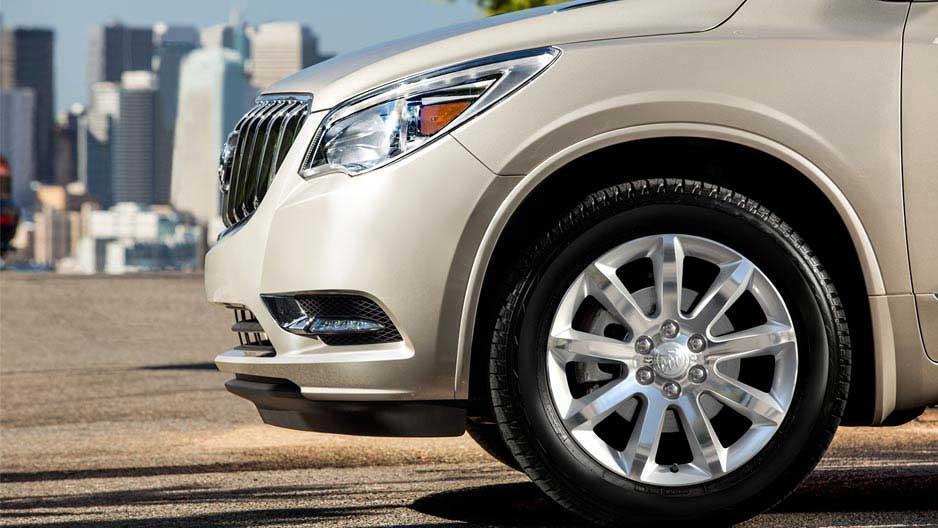
- The powertrain warranty covers the components and systems responsible for the movement of your vehicle.
- When you buy a new car, your manufacturer will usually warranty the transmission for at least 5 years or 60,000 miles.
- While your vehicle's powertrain warranty is in effect, your vehicle's engine, transmission and drivetrain are protected against covered defects or damage.
- Once the manufacturer's powertrain warranty expires, you can extend your vehicle's powertrain warranty by purchasing an extended warranty.
A powertrain warranty protects your car's most important components, but what exactly does that mean?
The term «transmission» refers to the parts of your vehicle that transfer power from your car's engine to its wheels and regulate it. Learning about the manufacturer's powertrain warranty will not only improve your peace of mind, but you can also decide whether or not to purchase a longer powertrain warranty from one of the best extended car warranty companies.
To begin the process, this guide will detail what a transmission warranty is, what transmission coverage entails, and finally, what you should do when your transmission warranty expires.
|
Best Extended Warranty Check out our best deals for your car: Article View |
What is a transmission warranty?
A powertrain warranty covers the parts that make your car move, including the engine, transmission, and drivetrain. New cars are usually covered by a powertrain warranty, which protects your car after a mechanical failure for a certain period of time.
The components that make up a car's transmission are some of the most expensive and important parts of a vehicle. Even a basic transmission repair can cost thousands of dollars in labor and parts, so a good transmission warranty can be especially valuable as your car ages. For example, according to RepairPal, a transmission replacement on a 2018 Honda Civic can cost more than $6,000.
What does the powertrain warranty cover?
Generally speaking, the powertrain warranty covers three key vehicle systems: the engine, transmission, and drive system. The components covered by these systems vary depending on your vehicle and the powertrain warranty agreement.
We know that's not necessarily a lot, so we've put together a handy table with a list of parts that are typically covered by a transmission warranty.
| Vehicle system | Standard components covered by the powertrain warranty |
|---|---|
| Engine | Engine cushion, cylinder block, cylinder heads, engine gaskets and seals, pistons and compressor gaskets, fuel injection and hydraulic / oil / water pumps, timing chain, valve train, flywheel, timing gears and belts |
| Transmission | Transmission, torque converter, transfer case (four-wheel drive and all-wheel drive), hydraulic lines, center gearbox, clutches, actuation sensors, transmission fluid lines |
| Drive system | Differentials and differential housing, driveshafts, all internal joints, driveshaft and half axles, CV and universal (U) joints, axle hubs, intake manifolds, hub bearings |
What is not covered under the transmission warranty?
The powertrain warranty does not cover systems other than your vehicle's engine, transmission, and drivetrain. This means you won't have coverage for things like the braking system, chassis and trim, air conditioning, interior entertainment, suspension, and auxiliary electrical systems.
Depending on your plan and provider, your transmission warranty may also exclude the following maintenance and repair items:
- Oil change
- Tire RPMs
- Engine control module sensors and connectors
- Secondary hose and secondary hydraulic lines
Remember, the powertrain warranty only covers repair or replacement of components if the damage is clearly caused by poor workmanship, defective materials, or faulty drive systems. The powertrain warranty does not cover damage resulting from accidents, aftermarket modifications, irregular maintenance, or careless driving.
If a transmission component is damaged due to everyday wear and tear, it is also not covered by the transmission warranty. Denial of a claim due to wear and tear is particularly common for the following transmission components:
- Clutches
- Timing belts
- Oil filter unit
- Cylinder heads
- Distributor covers and rotors
- Engine control module sensors
Finally, powertrain warranties do not include provisions to cover damage caused by hurricane, fire, flood, vandalism, or theft. If you want to insure your car against these potential perils, you need to purchase a comprehensive auto insurance policy.
Powertrain warranty and bumper-to-bumper warranty
A manufacturer's warranty often includes a separate powertrain and bumper-to-bumper warranty. The powertrain warranty covers the engine, transmission, and drivetrain, while the bumper-to-bumper warranty - a more comprehensive warranty - covers all other major systems between your vehicle's bumpers.
A powertrain warranty covers fewer components than a bumper-to-bumper warranty, but the coverage remains active for a longer period of time. The industry standard for bumper-to-bumper warranty coverage is three years or 36,000 miles, although some manufacturers offer up to five years or 60,000 miles.
Some brands do not offer a separate powertrain warranty, and all coverage is provided by a four-year warranty that includes bumper-to-bumper and powertrain coverage. This is typical of luxury brands.
Even though bumper-to-bumper warranties are more comprehensive than powertrain warranties, you will still encounter some exclusions to coverage, such as:
- Salon interior
- Glass
- Brake pads and shoes
- Tire support and tire tread
- Chassis structure and cladding
- Cabin trim, fabrics and seat upholstery
How much is the warranty on the transmission?
The powertrain warranty that comes with new vehicles is free of charge. Once the factory warranty expires, you may want to consider purchasing an extended warranty. Our research shows that a powertrain warranty costs an average of $2,856 and adds three to six years of warranty coverage. Keep in mind that this amount can be broken down into small monthly payments with interest-free financing.
To better understand the cost of a powertrain warranty, we reached out to several reputable extended car warranty companies and asked for a quote on a 2013 Honda Accord with 90000 miles on it. Here's what they told us for a powertrain warranty with a $100 deductible:
| Warranty company | Transmission warranty plan | Validity | Monthly payment | Initial payment | Total cost |
|---|---|---|---|---|---|
| Endurance | Secure Plus | 5 years / 100,000 miles | 81.67 $ for 36 months | 174,75 $ | $2,940.12. US$ 2,940.12 |
| CARCHEX | Silver | 5 years / 75,000 miles | 116.09 $ for 24 months | Payment for the first month | 2,786.16 dollars. US$ 2,786.16 |
| CarShield | Gold | Unlimited | $ 99.99 per month | Payment for the first month | $1,199.88 per year |
| Protect my car | Transmission | 4 years / 75,000 miles | 78.86 $ for 42 months | $85.00. USD | 3312.12 dollars. USD |
How long is the warranty on the transmission?
The manufacturer's standard powertrain warranty lasts five years or 60,000 miles, whichever comes first. However, many manufacturers have shorter or longer powertrain warranties, and the extended powertrain warranty will depend on your supplier.
The table below shows the duration of the powertrain warranty for many major automobile brands sold in the United States.
| Transmission Warranty | Validity |
|---|---|
| Genesis Warranty | 10 years / 100,000 miles |
| Hyundai Warranty | 10 years / 100,000 miles |
| Kia Warranty | 10 years / 100,000 miles |
| Lincoln Warranty | 6 years / 70,000 miles |
| Chevy Warranty | 5 years / 60,000 miles or 8 years / 80,000 miles for the Bolt electric vehicle |
| Ford Warranty | 5 years / 100,000 miles or 5 years / 160,000 miles for diesel engine models |
| Chrysler Warranty | 5 years / 60,000 miles |
| Dodge Warranty | 5 years / 60,000 miles |
| Honda Warranty | 5 years / 60,000 miles |
| Jeep Warranty | 5 years / 60,000 miles |
| Mazda Warranty | 5 years / 60,000 miles |
| Nissan Warranty | 5 years / 60,000 miles |
| Subaru Warranty | 5 years / 60,000 miles |
| Toyota warranty | 5 years / 60,000 miles |
| Audi warranty | 4 years / 50,000 miles |
| Fiat warranty | 4 years / 50,000 miles |
If you are buying a used vehicle that is still under warranty, the remaining term of the powertrain warranty may be adjusted or standardized. For example, a new Hyundai Elantra typically comes with 10-year / 100,000-mile powertrain coverage under the Hyundai warranty. In comparison, the standard powertrain warranty on a used Hyundai Elantra is five years or 60,000 miles.
3 tips for caring for your car's transmission
Update maintenance records in a timely manner. By proactively identifying and correcting minor problems, you will prevent minor issues from escalating into more serious mechanical problems. In addition to regular maintenance, we highly recommend servicing your vehicle when it reaches certain milestones, such as 30,000 miles or 50,000 miles.
Perform preventive maintenance as necessary. As a vehicle owner, you are responsible for a wide range of urgent maintenance tasks. To keep your transmission running smoothly, you need to regularly check, clean or change your vehicle's engine oil, radiator fluid, internal lubrication, air filter, oil filter and battery.
Operate your vehicle responsibly. Careless driving is one of the quickest ways to damage your transmission. If you want to extend the life of your transmission, we recommend the following best practices: minimize overall engine load, avoid dangerous off-roading and avoid potholes. According to AAA research, pothole damage alone costs U.S. drivers an estimated $3 billion dollars in vehicle repairs each year.
Where to get a warranty on a transmission?
When you buy a new car, it comes with a new car limited warranty package. This warranty package usually includes the manufacturer's powertrain warranty. You can also purchase an extended powertrain warranty from a dealership or third-party supplier.
How to protect your vehicle after your transmission warranty expires
When your manufacturer's warranty expires, you can drive without protection or extend your coverage under an extended powertrain warranty. You have two options for extended warranties: purchasing manufacturer-supported vehicle service contracts through your dealership or going to a third-party provider for a customized plan.
Different extended warranty plans provide different levels of component coverage. Depending on your supplier, an extended powertrain warranty contract can provide access to a wide range of benefits, such as:
- Concierge support
- Help on the road
- Trip interruption insurance
- Reimbursement of car rental expenses
- Free or discounted vehicle performance adjustments
- Compensation for towing, fuel delivery and battery charging services.
Why choose a third-party extended warranty provider?
The extended powertrain warranty provider you choose will have a big impact on your coverage, the cost of the plan and the claims process. Manufacturer coverage typically guarantees you original equipment manufacturer (OEM) parts, while a third-party protection plan typically provides more customizable coverage.
Third-party extended warranty providers are not limited by the strict terms of the manufacturer's coverage. Your powertrain warranty can be more closely tailored to your vehicle's expected mileage, scheduled repairs, and your personal budget requirements.
Third-party companies are not affiliated with any car manufacturer or dealership. As a result, vehicle owners have no contractual obligation to have their vehicle repaired exclusively at manufacturer-authorized service centers. You can use your favorite local repair shop or go to the nearest dealership.
To find out how much you'll pay for powertrain warranty coverage from our top recommended providers, get some free quotes for your vehicle below.
The Best Extended Warranty Companies We've looked at the best extended warranty providers for cars, and here are our top picks.
| Best Overall | Best for Used Cars | Most affordable |
 |
 |
 |
| Endurance | CARCHEX | CarShield |
    |
     |
    |
| Get a quote | Get a quote | Get a quote |
| (877) 374-1840 | (866) 254-0205 | (800) 563-2761 |
Frequently Asked Questions
Does the suspension fall under the powertrain warranty?
No, a powertrain warranty rarely covers the cost of suspension repair or replacement. Remember, a powertrain warranty only covers the parts of the vehicle that are directly involved in moving your vehicle forward or backward.
Are the sensors covered under the transmission warranty?
For the most part yes, the sensors are covered under the powertrain warranty. Standard coverage includes the engine control module's primary sensors. However, your vehicle's auxiliary sensor systems, such as interior alarm sensors, brake sensors, or suspension sensors, are usually not covered under your powertrain warranty.
Is it possible to transfer the transmission warranty?
Yes, the powertrain warranty is generally transferable to others. If ownership of the vehicle changes, the vehicle's powertrain warranty can be transferred to the new owner, usually for a small transfer fee.
Can transmission coverage be canceled?
Yes, transmission coverage can be canceled if you ignore the terms of your warranty contract. If you commit only a minor breach of contract, your service provider may deny your claim for coverage but allow you to keep the basic transmission plan for future repairs. However, more serious warranty violations, such as improper off-road use of your vehicle, negligent service scheduling, or aftermarket modifications, may void the entire powertrain warranty.
What is the average cost of an extended car warranty?
The average cost of an extended car warranty is around $2,800. Your own price will depend on the make, model, age and mileage of your car, as well as the extended car warranty company you choose and your deductible.
What does the extended powertrain warranty cover?
The extended powertrain warranty covers the same systems as the manufacturer's powertrain warranty: engine, transmission, and driveline. The specific internal parts in these systems will vary depending on your contract.



 EN_CA
EN_CA  RU
RU  UK
UK  EN
EN  PL
PL  DE
DE  BG
BG  FR
FR  JA
JA  ES
ES  EL
EL  IT
IT  RO
RO  TR
TR  SV
SV  CS
CS  KO
KO  NL
NL  FI
FI